
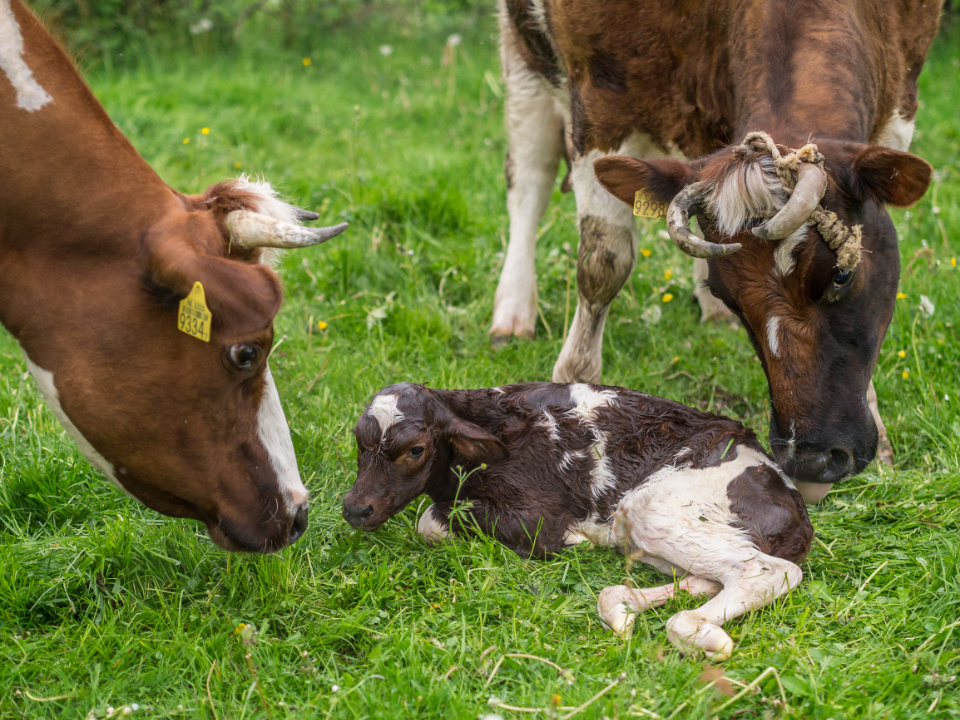
Source: Uberprutser via Wikimedia Commons
Reading Thomas Fudgé’s Medieval Religion and Its Anxieties, at first I found it hilariously funny.
But then my mood changed. What if we find it funny because we have harmful values?
Animal defendants
In the Middle Ages there were many court cases where a bull or a pig was taken to court, found guilty – usually of murder – and hanged.
The case Fudgé describes in most detail was The People of Autun v. City Rats in 1522. The rats had committed the felony of eating some barley. A formal summons was drawn up. The accused were remanded to appear before the court to answer charges within six days. At the scheduled arraignment no one answering to the description appeared. The presiding judge demanded to know why. Counsel for the defence argued that the legal writ had not specified which rats were to appear. The court accepted the point and issued an order requiring priests throughout the diocese to read the summons from every pulpit. At the second hearing, still no rats appeared. Counsel for the defence argued that the rats had a long way to travel and many were elderly. A third date was fixed. Yet again the rats failed to appear. Counsel for the defence now argued that the plaintiffs owned a number of cats who could not be relied on to maintain a posture of neutrality in the legal suit. The court therefore ordered the citizens of Autun to bind over their cats to keep the peace. The citizens, however, refused. At this point charges against the rats were summarily withdrawn sine die.
Fudgé’s source is a 1531 book by the counsel for the defence himself. Are our legs are being pulled? I wasn’t there at the time, so I don’t know.
But court cases involving large animals certainly took place. The medievals must have understood their relationship to other animals very differently from ours.
Alternative relationships
They were not the only ones. Marcy Norman’s The Tame and the Wild: People and Animals after 1492 describes how the indigenous people of the Caribbean and Central America related to other animals. They tamed some wild animals, but the purpose was to live alongside them as friends and companions, giving and receiving affection. They believed they had a duty of care towards those they fed, whether human or animal.
Norton sees our animal husbandry as expressing a distinction between humans and other animals. We domesticate animals purely to serve human requirements. Those other communities, by contrast, had a belief system that emphasised ‘the permeability and interconnectedness of all beings’. They classified living beings not into humans and everything else, but into the tame and the wild. The wild they would eat, but not the tame. The idea of keeping livestock as a food source was abhorrent to them.
‘Our’ beliefs about non-human animals, and ways of treating them, are known to be full of contradictions. At one extreme is the way we treat our pets. We attribute to them mental desires for food, a cuddle and a walk. We may even think they like us. At the other extreme is the behaviourist theory that animals have no mental concepts. This theory, widely believed to have been scientifically proved, has produced the systems that deliver meat to our supermarket shelves.
We have grown used to living with the contradictions. Even people who work in abattoirs often have pet dogs and cats. Vicki Hearne’s Adam’s Task: Calling Animals By Name (1987) draws attention to the absurdity of the behaviourist theory:
I noticed that in obedience and riding classes, people with training in the behavioural sciences hadn’t much chance of succeeding with their animals, and that the higher the degree held by the person, the worse the job of training was likely to be… Psychologists and philosophers had to bring their animals to me because they couldn’t house-break them, induce them to leave off chewing up the children or, in the case of horses, get them to cross the shadow of a pole laid on the ground.
Why should this be?
To the extent that the behaviourist manages to deny any belief in the dog’s potential for believing, intending, meaning etc, there will be no flow of intention, meaning, believing, hoping etc going on. The dog may respond to the behaviourist, but the behaviourist won’t respond to the dog’s response.
Why does it matter?
This reminds me of a conversation a while ago when I was a country vicar. The biblical book of Leviticus (22:27) says newborn calves are to be left with their mothers for a week. Britain was then in the European Union, which had reduced the time to 24 hours. I asked a dairy farmer about it. She said “You have to be really firm. The mothers kick up a dreadful fuss”. This farmer had two teenage daughters. I didn’t ask her how she would have felt. Anyway this isn’t about her. She had to make a living within the regulations. Since Britain has left the EU, it hasn’t reverted to that biblical standard.
Our grasping, self-centred society has a lot to learn from other traditions about how to relate to other species.
Most of the time when the word ‘people’ is used it refers to humans only. Robin Wall Kimmerer teaches us that the Indigenous view is to regard all living beings as people. Moreover, it should be routine for humans to ask permission when seeking to take from other people and then abide by the answer.
‘Calf at foot’ is a much more respectful method of dairying.